Experiencing FanRows
This page documents selected experimental observation contexts within FanRows. The materials shown here are not demonstrations of features or performances, but recorded interaction situations illustrating different perceptual conditions.
The focus lies on how bodily presence, movement, and stillness interact within the Sound as Space framework. Some recordings intentionally make system behavior explicit in order to clarify gesture–sound relationships.
Sessions
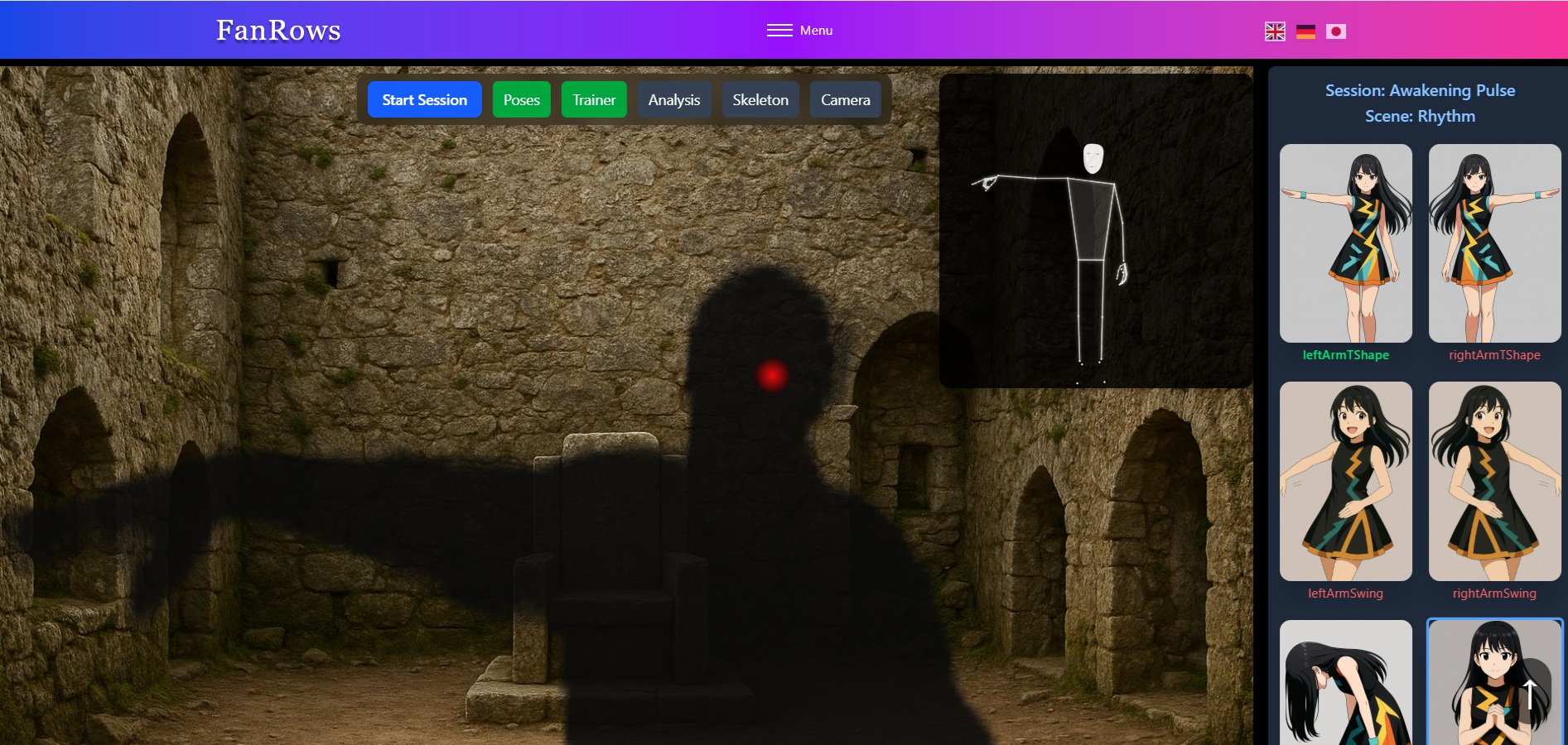
A session represents a concrete interaction run within FanRows. It captures how bodily presence and movement evolve over time under a given auditory configuration.
Sessions are used to observe:
- temporal stability and drift
- effects of sustained posture or stillness
- transitions between bodily states
Scenes

A scene defines a specific perceptual context within which sessions occur. It determines the active body-sound relationships, auditory layers, and visual conditions.
Scenes are not performances or compositions. They serve as structured environments for perceptual observation.
Studio
An internal configuration and observation environment.
Studio is used to explore and refine basic body-sound relationships by adjusting motion ranges, thresholds, and temporal parameters. Its purpose is not creative production, but the examination of mapping stability, sensitivity, and perceptual boundaries within continuous body–sound coupling. .
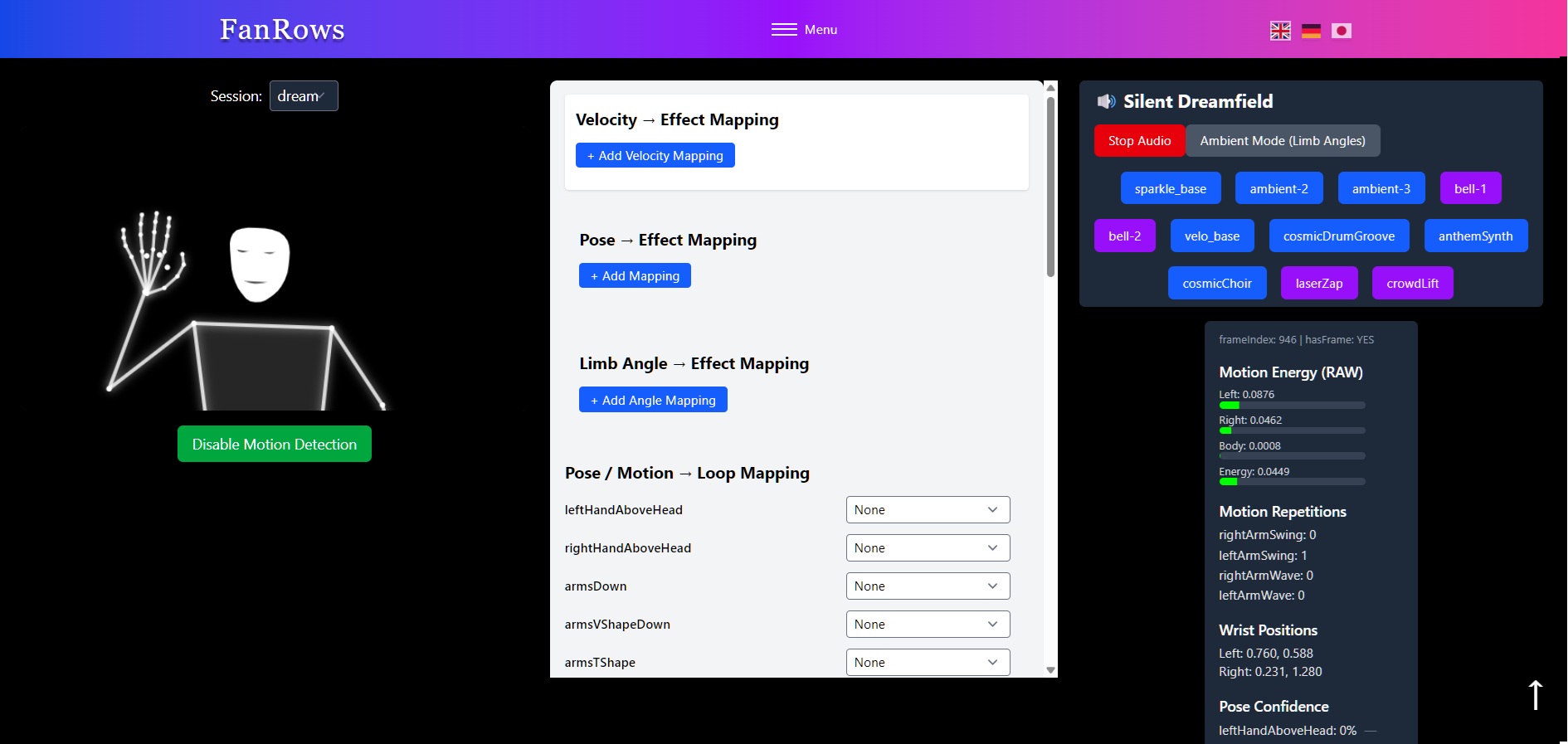 Overview of the Studio environment, showing the current body–sound mapping state.
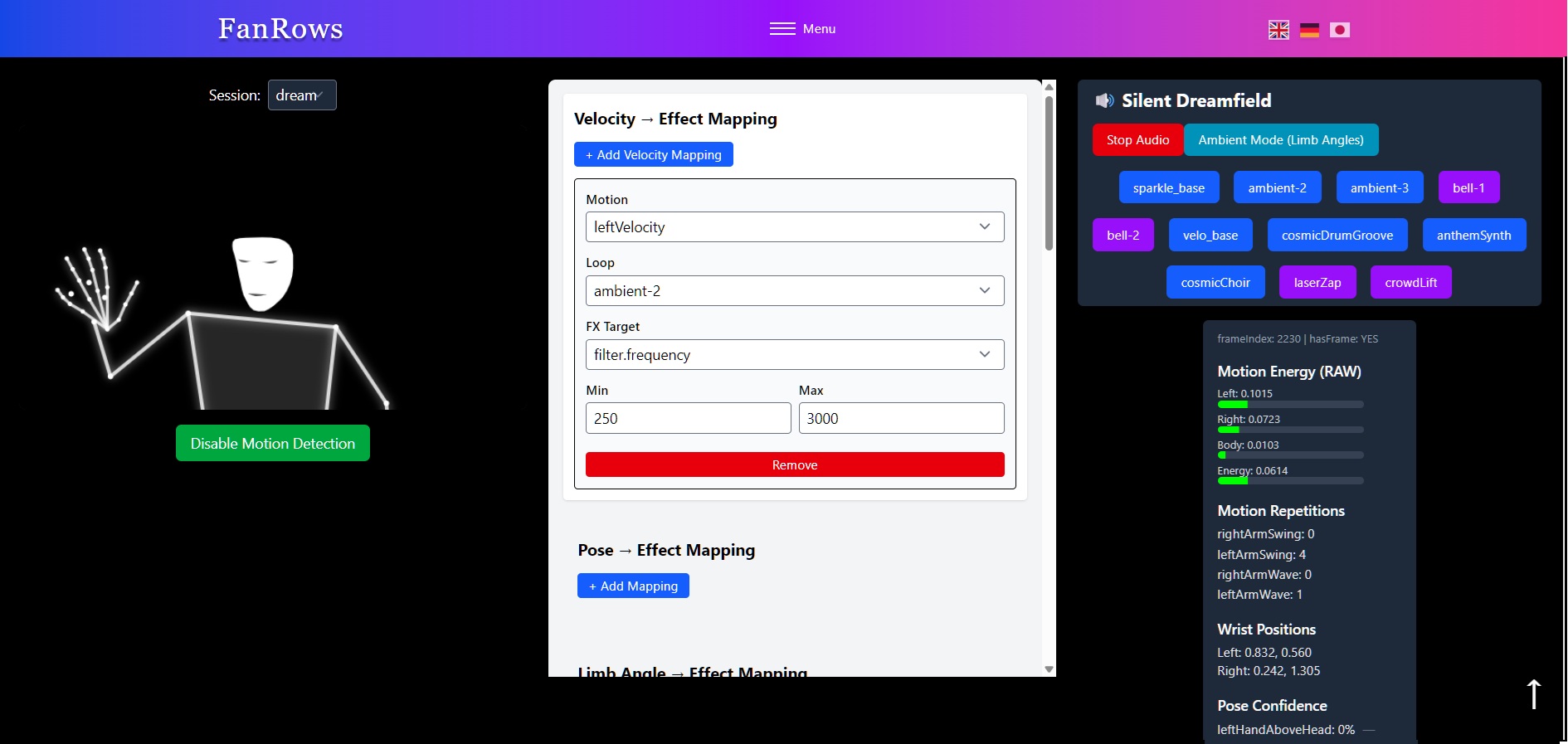 Configuration of velocity-based parameters used to observe sensitivity and temporal response.
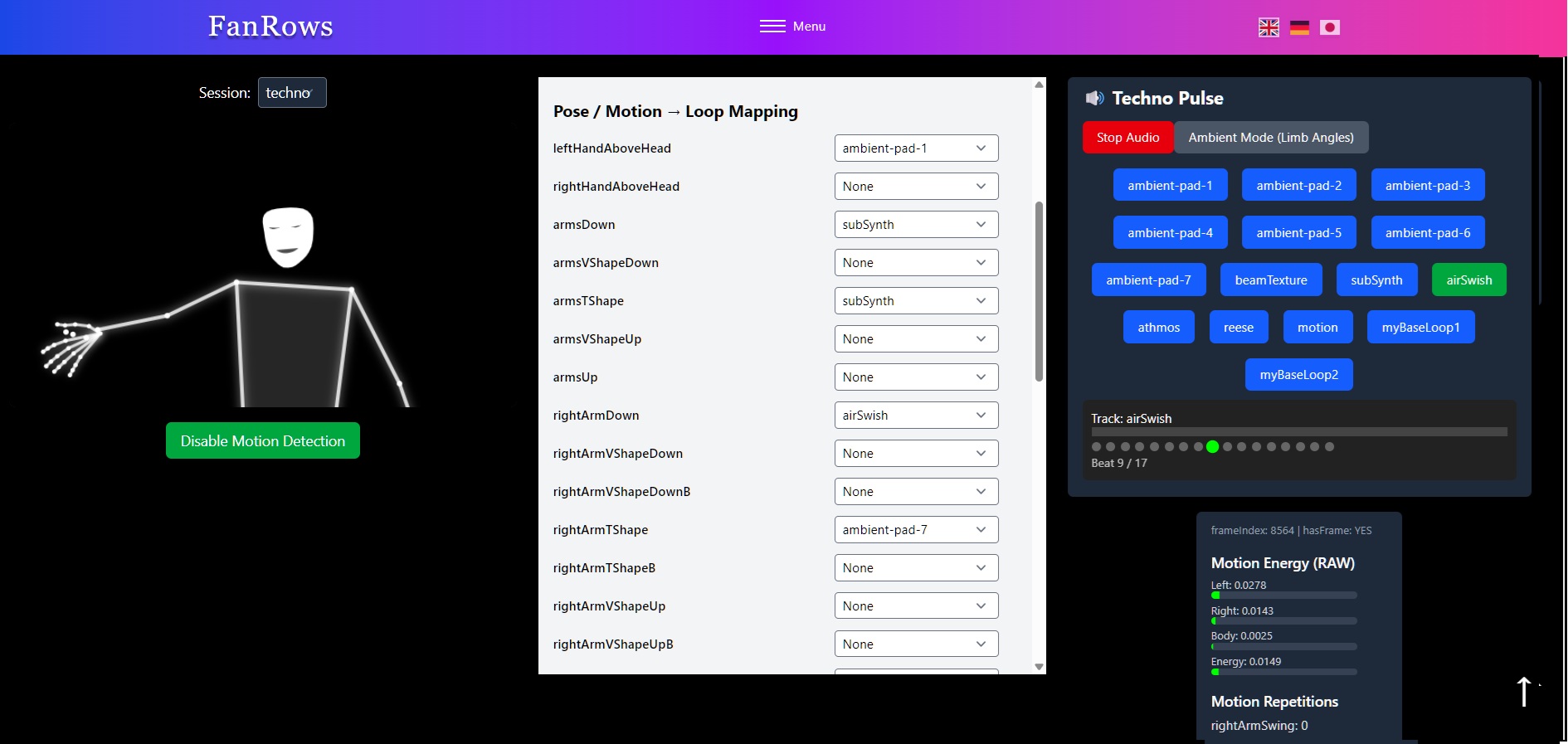 Mapping of bodily postures to auditory states for examining stability and transition behavior.
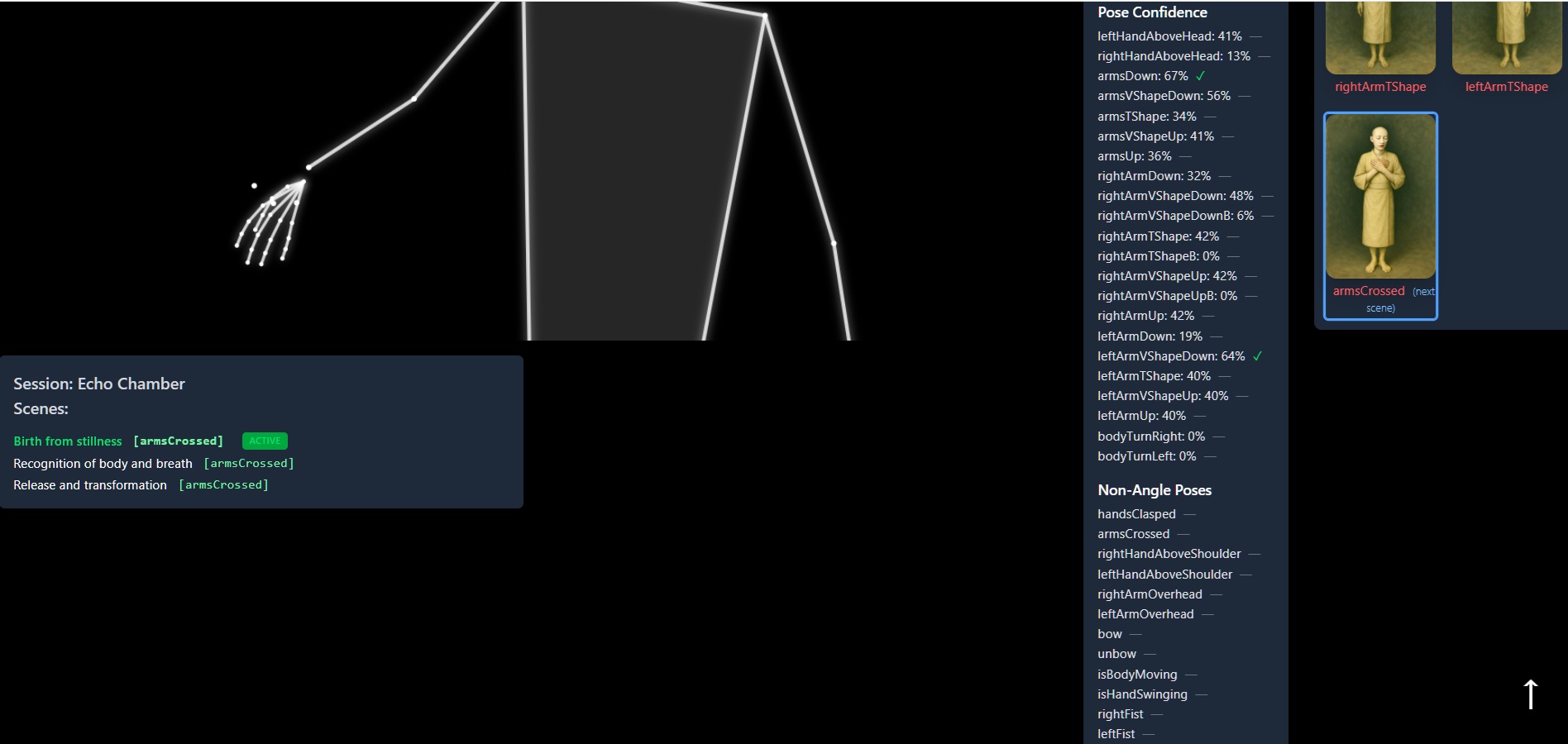 Session view displaying continuously evaluated pose confidence values, allowing observation of bodily state transitions within a defined interaction context.
Palette
An internal sound state preparation environment.
Palette allows the preparation of auditory material used within observation contexts. It does not represent a compositional or performance workflow.

System Behavior
FanRows operates through continuous body-sound coupling rather than discrete control.
- Bodily postures and movement ranges influence auditory states.
- Sustained stillness may lead to increased stability.
- Increased movement variability may lead to perceptual change.
- No explicit goals, scores, or success criteria are present.
Interaction is exploratory, continuous, and non-instrumental. No symbolic commands, gestures, or expressive intentions are required.
Technical Context
- Standard webcam-based motion tracking.
- All processing occurs locally in the browser.
- No storage or analysis of personal or biometric data.
- No cloud-based sound or motion processing.
FanRows - Sound as Space.
Next page Concept