A New Era of Shared Expression
Creativity has often been described as personal expression — a projection of individual thoughts, emotions, and perspectives into the world. Yet creative processes rarely unfold in isolation.
Across history, artistic production has emerged from shared rhythms, mutual influence, and distributed processes of adjustment. Understanding how such dynamics unfold within constructed systems becomes a structural design problem.
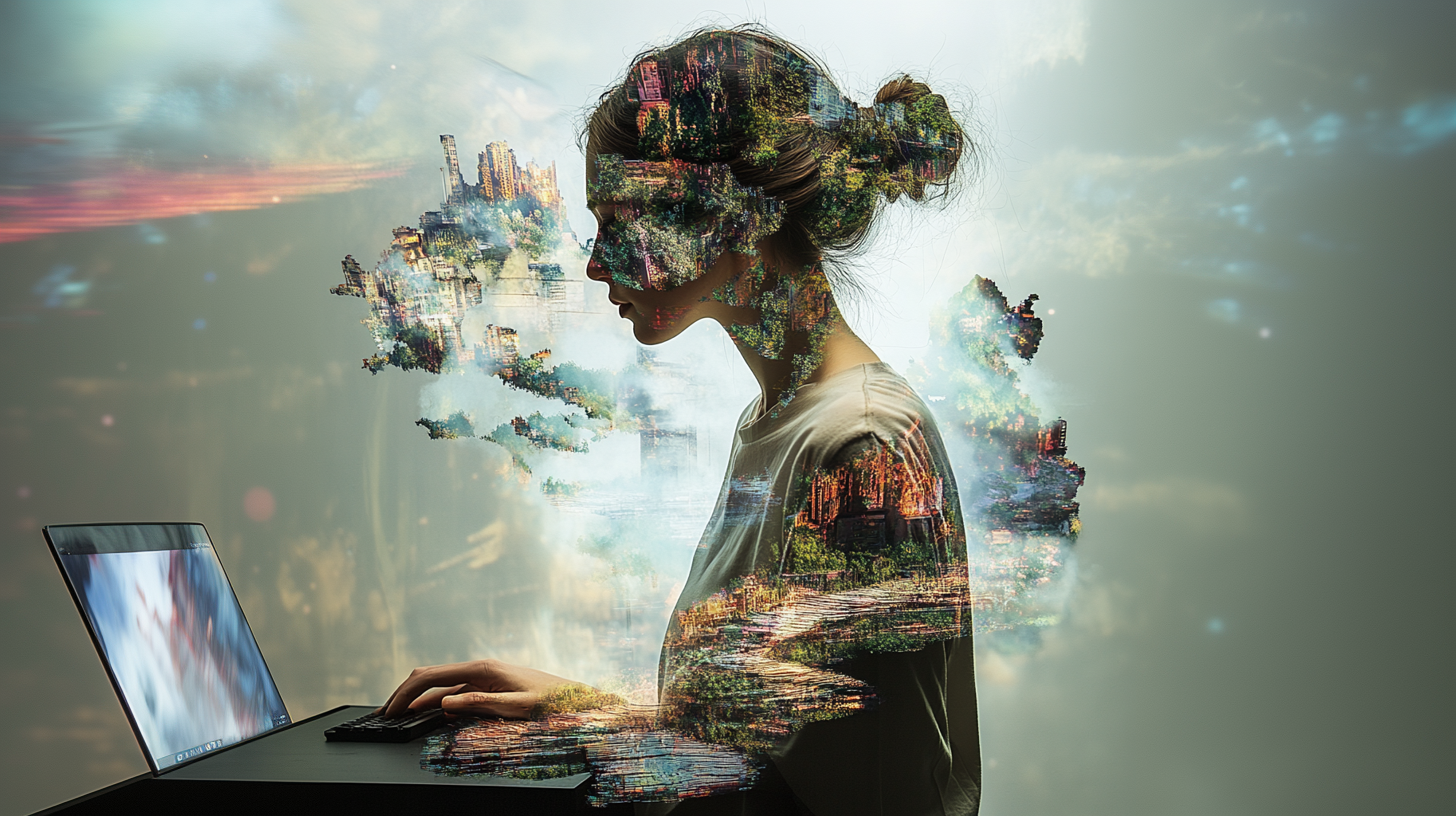
The Evolution of Creativity
Traditionally, collaboration depended on physical presence and shared tools — workshops, rehearsal rooms, studios — spaces where coordination unfolded directly.
Digital networks extended collaboration across distance.
However, most systems remain exchange-based:
- files are sent
- messages are posted
- versions are merged
Creative coordination is structured as symbolic exchange.
This raised a deeper question:
Can shared creation emerge from continuous mutual regulation rather than discrete exchange?
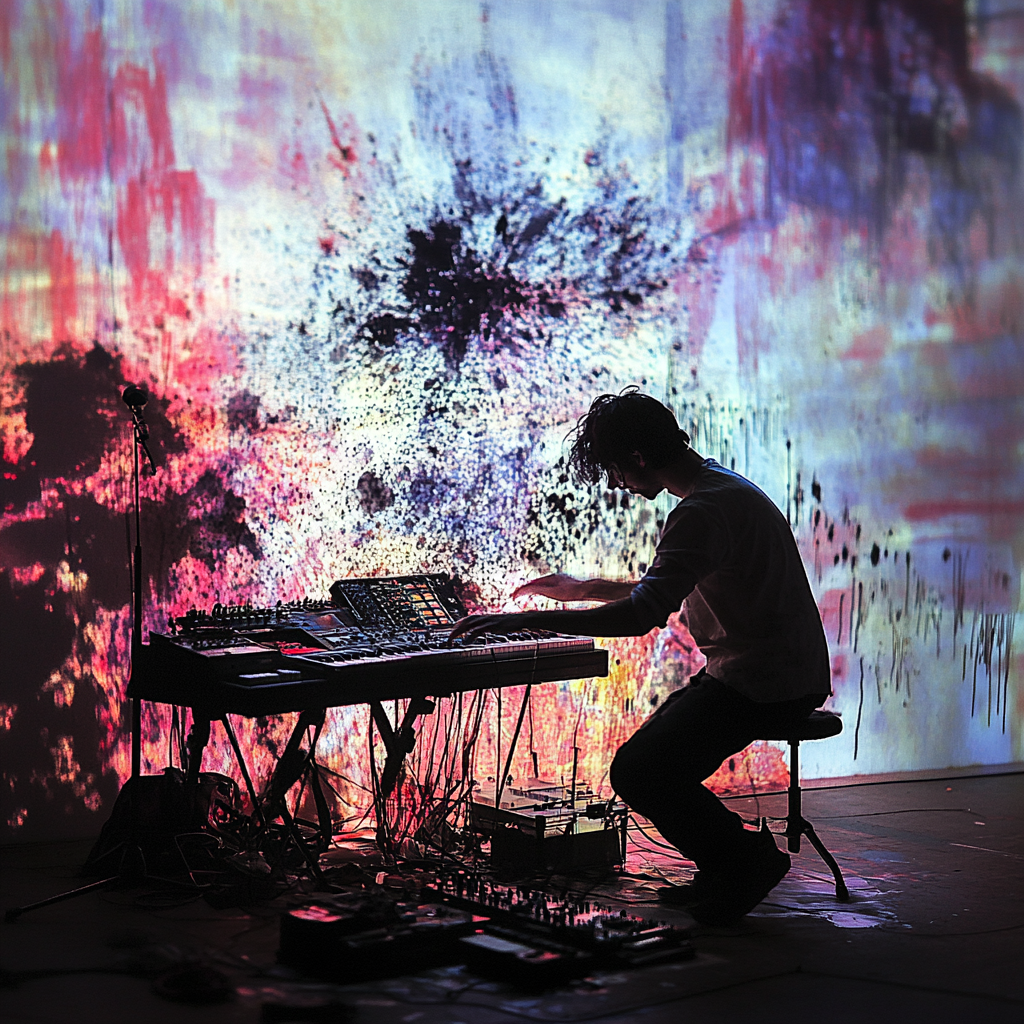
Creativity as Dynamic Coupling
Early ideas imagined dancers, musicians, and visual artists co-creating in real time through mediated systems. Instead of focusing solely on content exchange, the emphasis gradually shifted toward dynamic coupling.
If movement continuously shapes sound,
and sound continuously shapes movement,
then shared creativity becomes a process of mutual adjustment within a common field.
Technology, in this view, does not replace human creativity.
It structures the environment in which regulatory processes unfold.
The Role of Technology in Collaboration
AI and real-time systems can assist coordination, translation, and modulation.
Yet the decisive shift was architectural rather than inspirational.
Collaboration need not depend on interpretation of meaning.
It can arise through shared state dynamics.
Instead of building a universal creative platform, the development moved toward designing a feedback environment in which embodied states influence a shared sound field.
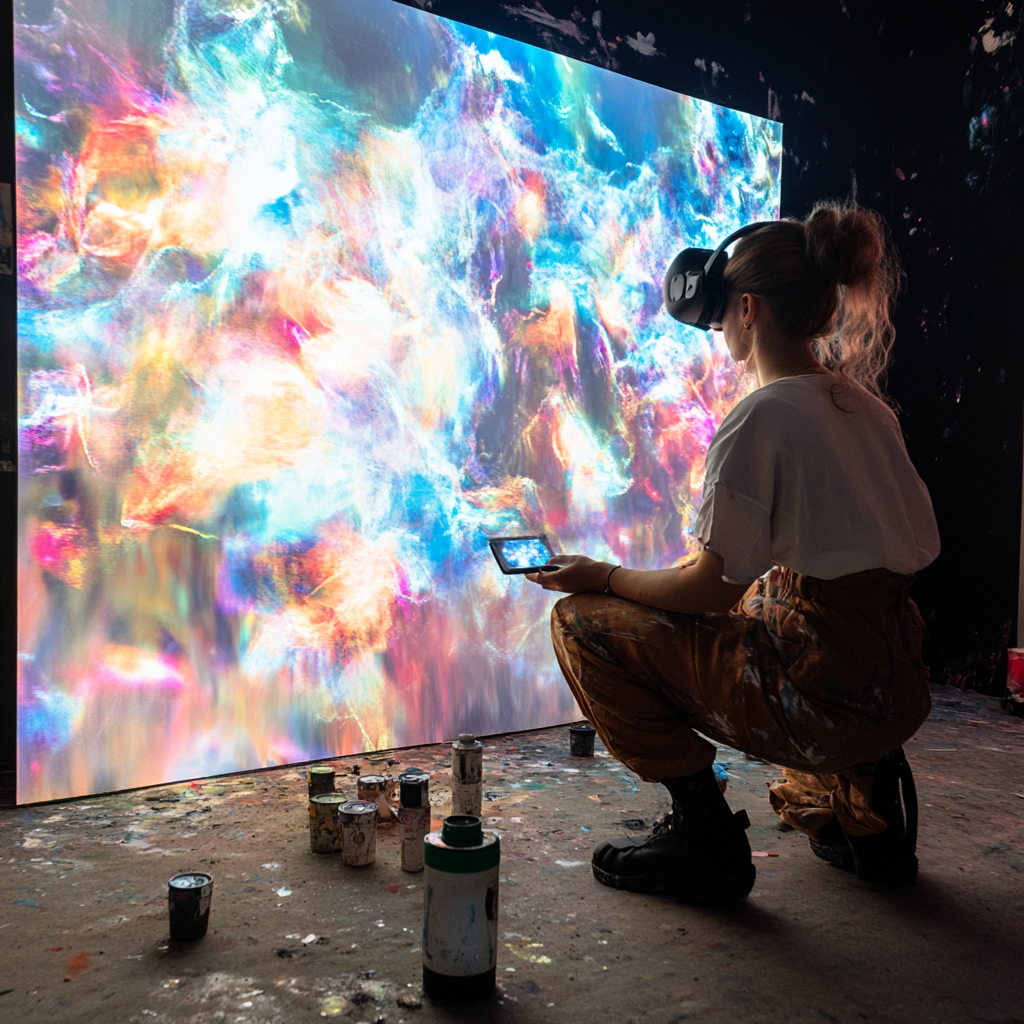
Beyond Individual Expression
In this emerging framework, shared creativity is not primarily about expressing inner content.
It is about co-regulation.
Participants influence a common dynamic system.
Stability, drift, and transition become collective phenomena.
This perspective extends beyond art into education, design, and experimental interaction research.
Toward Embodied Co-Regulation
The concept of collaborative creativity gradually transformed into a structural question:
How can a system support continuous embodied co-regulation without relying on symbolic exchange?
FanRows represents one experimental response. It establishes bounded regulatory state spaces in which movement shapes sound in real time.
The early vision of collective creation thus evolved into a structured investigation of shared feedback dynamics.
Digital Ecosystem as Regulatory Environment
Rather than imagining a universal creative platform, the focus shifted toward designing minimal environments that allow dynamic coupling to emerge.
In such systems, creativity is not transmitted. It stabilizes.
Not through messaging, but through sustained interaction within a shared field.
These reflections formed the conceptual groundwork for the embodied auditory architecture that followed.